Breaking In and Keeping: The Hiking Boot Ownership Manual
The boot purchase is the beginning — the break-in decides the first season and the care decides the decade. The ownership manual: the break-in schedules that prevent trail regret, the maintenance that keeps leather alive and the resole math that doubles lifespans.

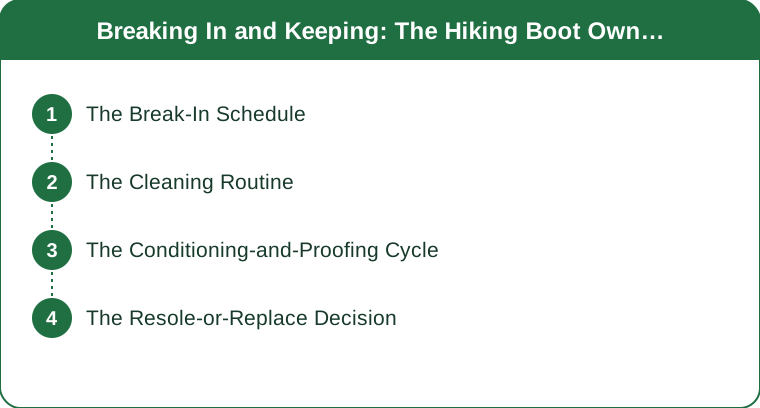
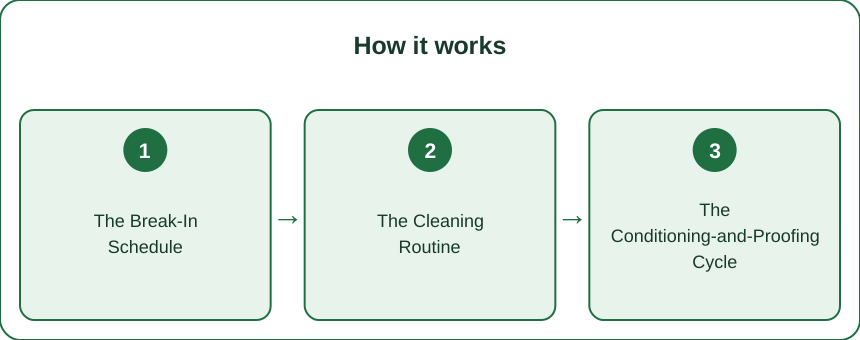
The Break-In Schedule
By boot type: the trail-runner and light-hiker tier (near-zero break-in — comfortable in the store or wrong; two neighborhood walks and trail-ready; the modern default that retired the suffering era), the mid-weight leather tier (the two-week schedule — the around-the-house days, then errand walks, then the two short local hikes before anything committed; the leather molding to your foot on YOUR schedule, not the trail’s), the heavy full-leather tier (the traditional month — the boot that outlasts a decade earns its patient introduction; the schedule that generations of hikers learned by skipping it once), and the universal rules (break in with your actual hiking socks — the sock system from its chapter; the hot-spots noted during break-in map the pre-taping plan; and the trip-boot law: no boot debuts on a big hike, ever — the checklist item that prevents the most preventable trail misery).
The Cleaning Routine
The after-hike care: the mud law (mud dries and pulls moisture from leather while grinding seams — the same-week brush-off is the boot’s biggest lifespan lever; the stiff brush and the ten-minute habit), the wash protocol (the occasional proper clean — laces out, insoles out, lukewarm water and boot cleaner or mild soap; never the washing machine, which murders boots efficiently), the drying discipline (air-dry always — stuffed with newspaper for speed; NEVER the radiator-heater-fire tier, which cracks leather and delaminated soles teach expensive lessons; the two-day patience), and the insole-and-lace maintenance (the insoles aired after every hike, replaced yearly-ish — the boot’s climate control; the spare laces in the kit because laces fail at trailheads exclusively).

The Conditioning-and-Proofing Cycle
Keeping materials alive: the leather feeding (the conditioner applied to clean, slightly-damp leather seasonally — the leather that dries out cracks; the boot cream-and-wax tier matched to your leather type per the manufacturer’s word), the waterproofing renewal (the DWR-and-membrane boots re-proofed when water stops beading — the spray-or-wax cycle from the shell chapter at foot level; waterproofness is maintenance, everywhere), the over-conditioning caution (leather over-softened loses support — seasonal, not monthly; the boot should stay a boot), and the fabric-boot version (the synthetic-and-mesh boots skipping conditioner but keeping the clean-and-reproof cycle — the simpler regimen for the simpler materials).
The Resole-or-Replace Decision
The end-game math: the resole candidates (quality boots with stitched or resoleable construction — the uppers-outlast-soles design that premium boots carry; the worn-smooth tread on a healthy upper is a repair, not a funeral; the cobbler-or-manufacturer resole at a third of replacement price), the replace signals (the compressed midsole from the boot chapter — the cushioning that’s structurally done; the cracked uppers, the separated construction beyond repair), the retirement path (the retired hikers demoting to garden-and-errand duty — the boot lifecycle that never quite ends), and the ownership payoff (the cared-for quality boot logging a decade of trails at a cost-per-hike that embarrasses every replacement cycle — the manual’s whole math; the boots carried you up every trail, and the care just returns the favor). Broken in patiently, cleaned promptly, resoled once: the decade, booted.
Break in on the boot’s schedule not the trail’s, brush the mud same week, dry slow and condition seasonally, resole the worthy. Boot ownership is a manual — follow it and the decade is included.
Keep Reading
This article is for general informational and styling purposes only. Fit, sizing, and product availability may vary.