The Hiking Sock System: The Cheap Half of Happy Trail Feet
The boot gets the budget and the sock gets forgotten — backwards, since the sock is half the comfort system and a tenth of the price. The hiking-sock guide: the materials that matter, the cushion-and-height decisions and the blister system that socks anchor.
The Material Science
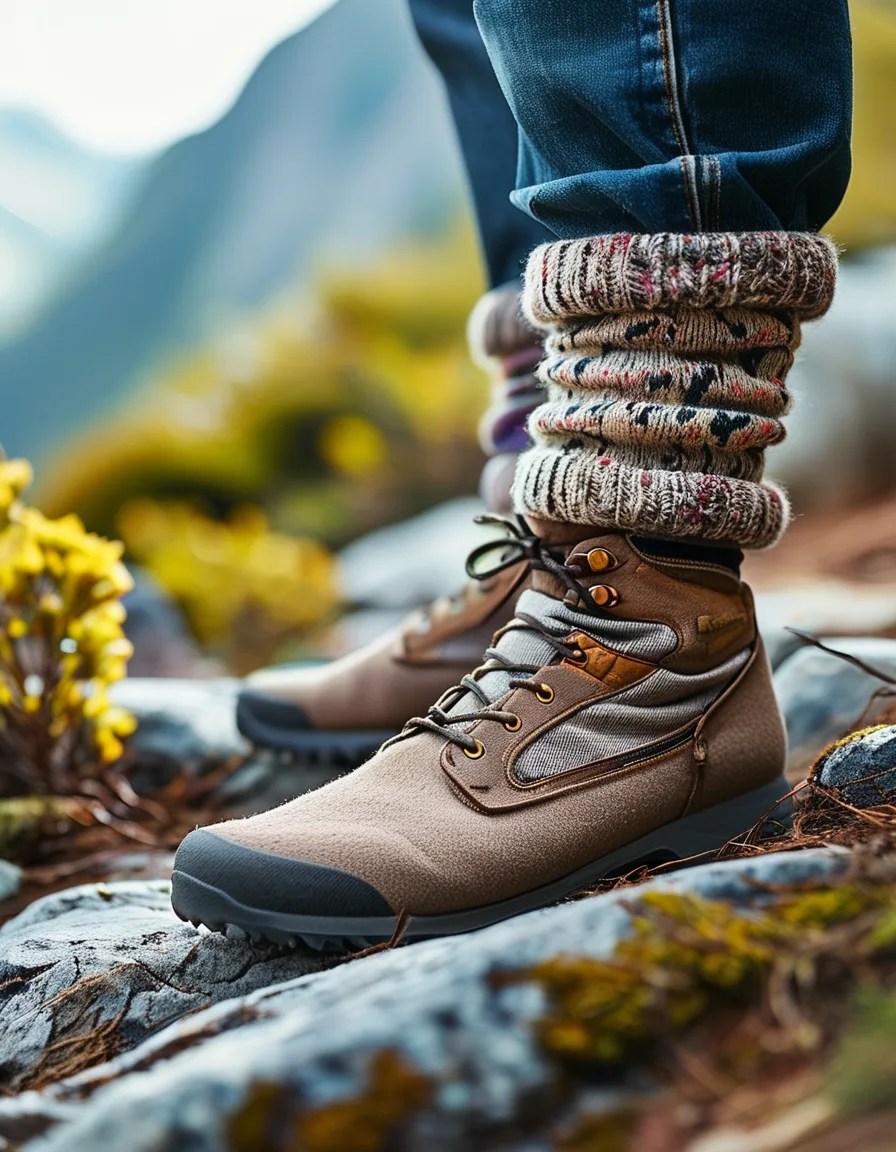
Why sock fabric decides comfort: the cotton prohibition (cotton holds moisture against skin — the wet-sock blister factory and the cold-weather hazard; the one absolute rule of trail socks), the merino reign (the wool that manages moisture, resists odor across multi-day wears and insulates damp — the hiking-sock default for excellent reasons; the merino-blend versions adding durability where pure wool wears), the synthetic tier (the durable, fast-drying, budget-friendlier option — the polyester-nylon blends that trade merino’s odor-resistance for price), and the fit-fabric interaction (the sock that fits snug without bunching — the wrinkle under the arch at kilometer ten is tomorrow’s blister; the sized-sock over the one-size stretch).
The Cushion-and-Height Decisions
Matching sock to hike: the cushion spectrum (the light-cushion for warm days and trail runners, the medium for the day-hike default, the heavy for cold weather and pack-carrying — cushion is warmth AND impact padding; the summer heavy-cushion foot swims), the height logic (the crew height that outlasts boot collars — the sock ending below the boot top is the debris-and-rub recipe; the trail-runner crowd’s ankle heights matched to low shoes), the seam-and-construction details (the flat-toe seams that don’t ridge — the seam blister being entirely a construction purchase), and the two-pair economics (quality hiking socks cost real money and outlast cheap multipacks by years — the cost-per-trail-day math that favors the good drawer; the rotation extending everything).

The Blister System
Socks as the anchor layer: the moisture management first (the blister triad is heat-moisture-friction — merino manages the middle one; the sock swap at lunch on long wet days is the underused move; the spare pair weighs nothing), the liner-sock option (the thin liner under the hiking sock — the two-layer system that moves friction between socks instead of on skin; the double-layer socks building it in; the prone-to-blisters population’s classic answer), the pre-taping partnership (the known hot-spot taped BEFORE the hike — the socks-and-tape system from the boot-fit world; the heel and toe zones that history identifies), and the early-response protocol (the hot-spot addressed at first warmth — the stop-NOW-and-tape discipline that saves hikes; the blister you feel forming is ten minutes from permanent).
The Care-and-Kit Layer
The sock life: the wash rules (merino washed cool and air-dried — the dryer that shrinks and ages wool; the wash-less-between-wears merino privilege the odor-resistance grants), the retirement signals (the thinned heels and packed-down cushion — the sock that’s flat protects like it’s flat; the seasonal audit), the kit standards (the day-hike carries a spare pair, the multi-day carries per-day-plus-one — the wet-sock morning has no good version), and the budget wisdom (the boot-budget question from the boot chapter often answers better as boots-plus-good-socks — the mid-tier boot with excellent socks outcomforts the premium boot with cotton multipacks; the system was always two parts, priced 10:1 and mattering 50:50). Merino on, seams flat, spare in the pack: the cheap half, handled.
Never cotton, merino default, cushion by season, spare pair always. The sock is half the comfort at a tenth the price — the boot budget’s smartest line item.
Keep Reading
This article is for general informational and styling purposes only. Fit, sizing, and product availability may vary.