Why Brand New Hiking Boots Still Hurt Even After You Did Everything Right to Break Them In
You wore them around the house, did the short walks, gave it real weeks of gradual break-in — and they still hurt on an actual hike. At some point, break-in time stops being the answer.

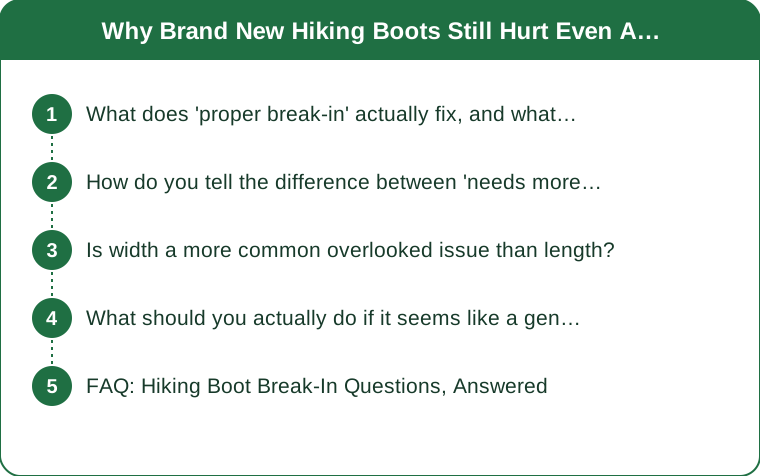
What does ‘proper break-in’ actually fix, and what does it not fix?
Break-in period genuinely softens stiff materials and allows the boot’s structure to gradually mold to your foot’s shape — but it cannot fix a fundamentally wrong size or width, or correct a boot whose internal shape simply doesn’t match your foot’s shape. Break-in improves fit within a boot that’s basically right for your foot; it doesn’t create a good fit out of a wrong one.
How do you tell the difference between ‘needs more break-in’ and ‘wrong fit entirely’?
Pain that’s improving gradually week over week, even slowly, suggests break-in is working — genuine progress, however slow, is the signal. Pain in the same specific spot that hasn’t meaningfully changed after several real hikes suggests a structural mismatch (width, shape, or size) that break-in time alone won’t resolve.

Is width a more common overlooked issue than length?
Often, yes — many people are sized correctly for length but not width, and a boot that’s too narrow for your foot’s actual width will continue causing pressure-point pain regardless of break-in time, since break-in softens material but doesn’t meaningfully widen a structurally narrow boot.
What should you actually do if it seems like a genuine fit mismatch?
Return to a specialty outdoor retailer for a proper fit reassessment, ideally one that measures both length and width and can assess your specific foot shape against different brands’ known fit profiles — different brands genuinely run different shapes (narrower heel, wider toe box, higher volume), and the right brand match matters more than persisting with the wrong one through more break-in time.
FAQ: Hiking Boot Break-In Questions, Answered
How long should proper hiking boot break-in typically take?
Most guidance suggests 2-4 weeks of progressively longer wear, from around-the-house time up to shorter local hikes, before a longer trip.
Is persistent heel pain specifically a sizing issue?
Often, yes — persistent heel pain frequently points to a heel that’s too wide or narrow relative to your foot, or a boot with the wrong overall volume for your foot shape.
Can insoles fix a fundamentally wrong-fitting boot?
Insoles can improve comfort and address some volume mismatch, but they generally can’t fix a boot that’s structurally the wrong width or shape for your foot.
TL;DR:
- Break-in period softens material and allows molding, but can’t fix a fundamentally wrong size or width
- Gradually improving pain suggests break-in is working; unchanged pain in the same spot suggests a real mismatch
- Width mismatch is a commonly overlooked issue separate from length sizing
- A proper fit reassessment at a specialty retailer, checking width and brand-specific shape, is the real fix for persistent issues
If the pain hasn’t budged after real break-in effort, it’s very possibly not a break-in problem at all — it’s a fit problem wearing a break-in disguise.
Keep Reading
This article is for general informational and styling purposes only. Fit, sizing, and product availability may vary.