Why Hiking Boots That Felt Perfect in the Store Hurt 3 Miles Into a Trail
Quick Answer: Store floors are flat and flat-footed walking doesn’t reveal how boots behave on an incline, with a loaded pack, or after your feet swell an hour in. Test boots on an incline (even store stairs), with the socks you’ll actually wear, and expect to size up half a size versus your regular shoe.
You walked the store aisle three times. Zero pinching, zero rubbing, felt snug and secure. Then mile 3 on an actual downhill and suddenly your toes are jamming into the front and a hot spot is blooming on your heel. The store test and the trail test are measuring completely different things.

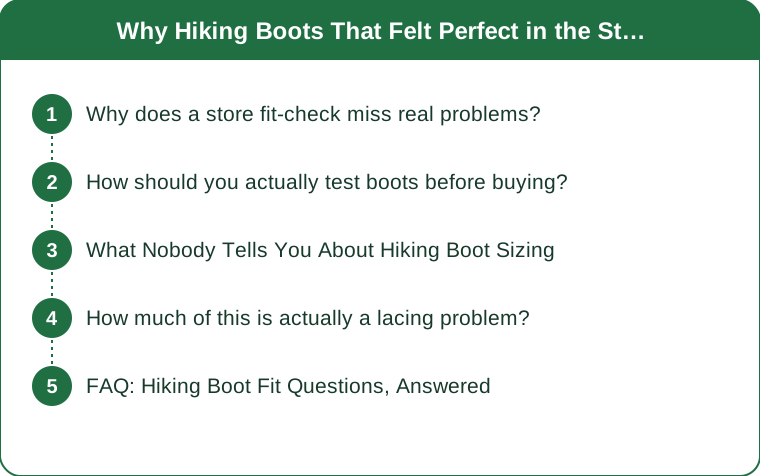
Why does a store fit-check miss real problems?
Store floors are flat, short-distance, and unloaded — no incline, no pack weight, no hour of walking to let feet swell. Downhill sections push your foot forward into the toe box in a way flat store aisles never simulate, which is exactly where that toe-jam pain comes from.
How should you actually test boots before buying?
Walk on an incline — most stores have a ramp or stairs, use them. Wear the exact socks you’ll hike in (thickness changes fit meaningfully). And shop later in the day, since feet swell 5-8% by afternoon, closer to trail conditions than a fresh morning foot.

What Nobody Tells You About Hiking Boot Sizing
Here’s the surprising part: most people should size up a half size from their regular shoe, specifically to leave toe room for downhill pressure. A boot that feels ‘snug and secure’ in the store, with zero front space, is often the exact boot that causes black toenails on a long descent.
How much of this is actually a lacing problem?
A significant portion of on-trail pain is fixable with lacing, not sizing. A heel-lock lace technique (looping the laces through the top eyelets before crossing) stops your heel sliding forward on descents, which is often the real cause of toe-jamming, not boot size alone. Learn this technique before assuming you need new boots.
FAQ: Hiking Boot Fit Questions, Answered
Should hiking boots feel tight when new?
Snug through the midfoot and heel, but with a thumb’s width of room at the toe — tightness everywhere is a red flag, not a good sign.
How long does boot break-in actually take?
Stiffer leather boots may need 20-40 miles; most modern boots need only a few short walks. If pain persists past 2-3 wears, it’s likely a fit issue, not a break-in issue.
Do thick hiking socks change what size I need?
Yes, significantly — always try boots on with the actual sock system (often a thin liner plus a cushioned hiking sock) you’ll wear on trail, not a thin cotton sock.
TL;DR:
- Flat store floors don’t reveal downhill toe-jam or pack-loaded pressure points
- Test on an incline, in your actual hiking socks, later in the day when feet are swollen
- Size up a half size from your regular shoe to leave toe room for descents
- Try a heel-lock lacing technique before assuming you need a different boot entirely
Keep Reading
This article is for general informational and styling purposes only. Fit, sizing, and product availability may vary.