Hiking Boot Fit in Cold Weather vs. Warm Weather: Why the Same Size Feels Different
Quick Answer: Cold weather hiking typically involves thicker socks and sometimes mild foot swelling from altitude or cold-induced circulation changes, both of which reduce the actual room inside a boot that fit comfortably in warm weather with thinner socks — this is why many hikers size boots specifically around their expected sock system rather than trying on boots with whatever socks they happen to be wearing that day.
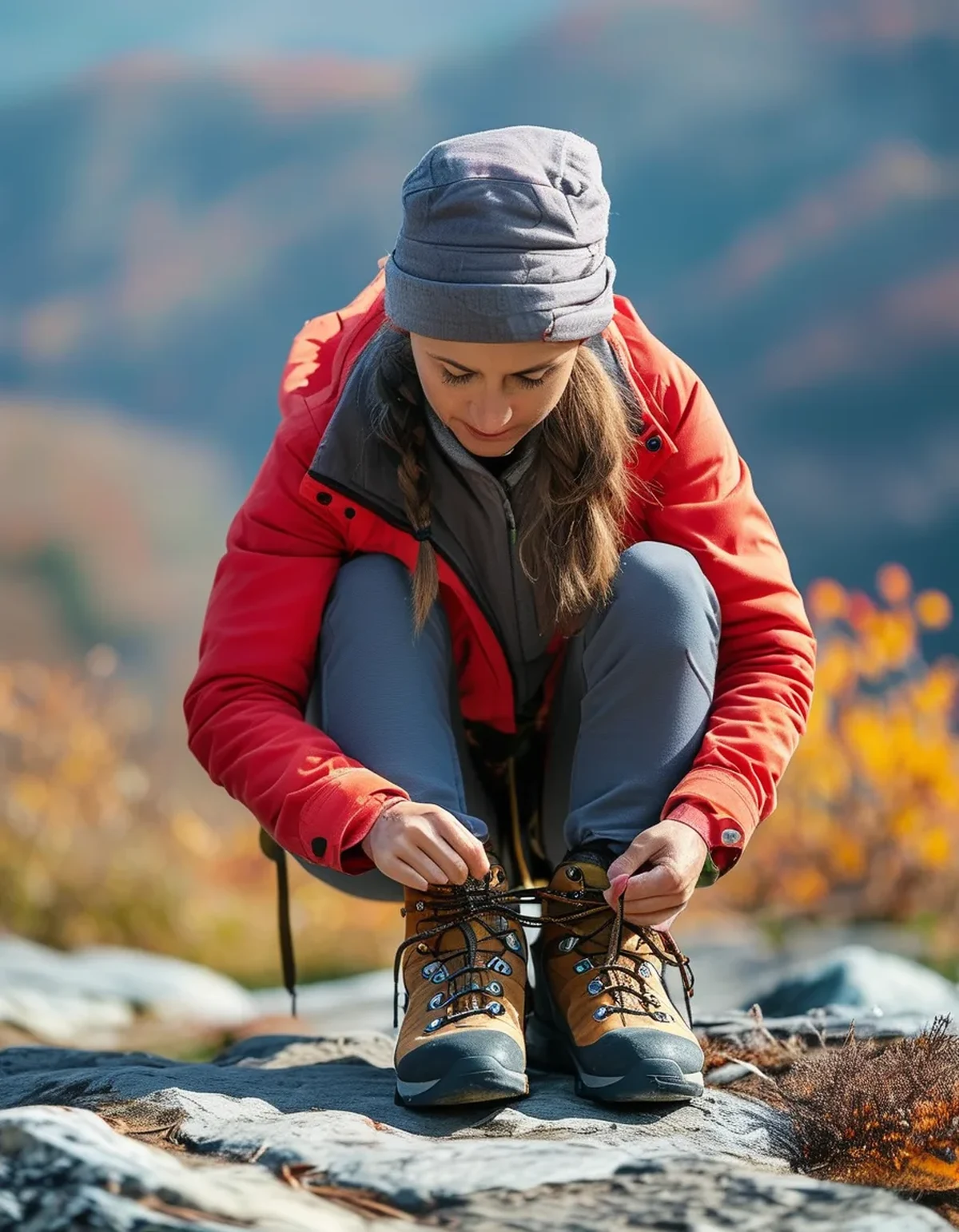
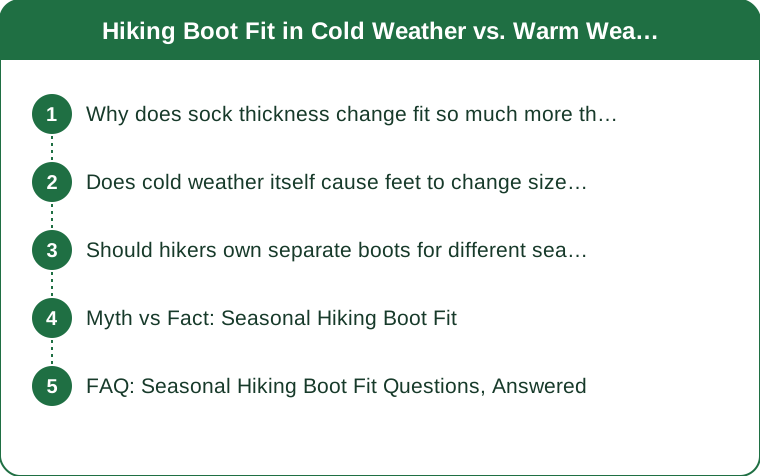
Why does sock thickness change fit so much more than people expect?
A thick winter hiking sock can take up a genuinely significant amount of interior boot volume compared to a thin summer sock, enough to meaningfully change toe room and overall snugness. Trying boots on with the actual sock system you’ll use in that season — not a thin store sock — is the single most reliable way to avoid this mismatch.
Does cold weather itself cause feet to change size, separate from socks?
Cold can cause some circulation-related tightening sensation, while unrelated factors like altitude, long hiking days, and hydration status can cause mild foot swelling — this means the same boot can feel different not just because of socks, but because of what the foot itself is doing that day, in ways that aren’t always predictable in advance.
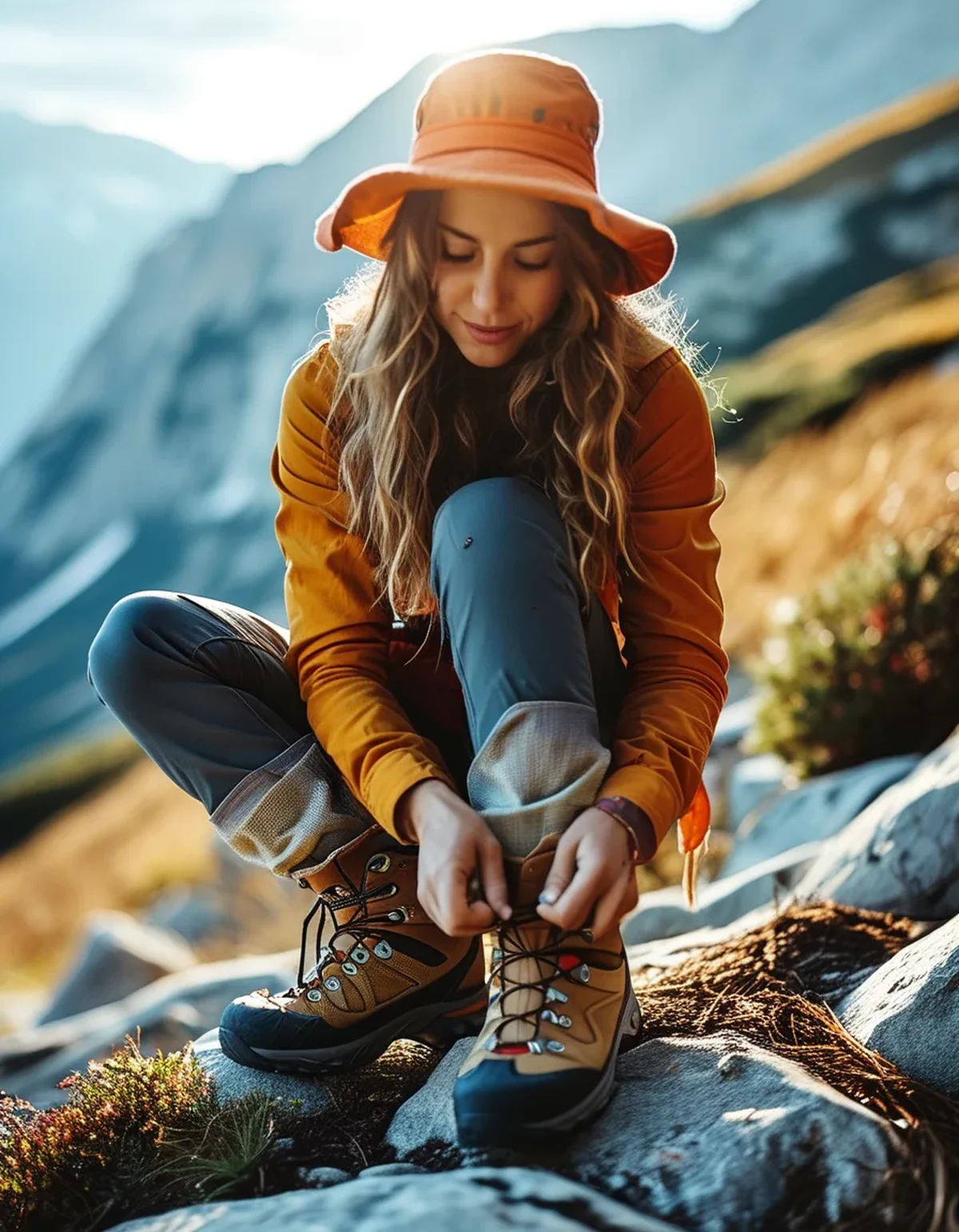
Should hikers own separate boots for different seasons rather than one pair?
Many serious hikers do maintain a warm-weather pair and a slightly roomier cold-weather (or insulated) pair specifically because of this sock and swelling variance, rather than trying to force one boot to work across the full seasonal range. This isn’t strictly necessary for occasional or fair-weather hikers, but it explains why frequent hikers often end up with more than one pair.
Myth vs Fact: Seasonal Hiking Boot Fit
Myth: A boot that fits well in one season will always fit the same in another. Fact: Sock thickness and circulation-related swelling genuinely change the interior fit experience, independent of the boot itself changing at all. Myth: Buying boots a half size up ‘to be safe’ solves seasonal fit variance. Fact: Sizing up too much creates its own problems (heel slip, blisters) in warmer weather with thinner socks — matching boot purchase to your actual sock system for that season works better than a blanket size-up.
FAQ: Seasonal Hiking Boot Fit Questions, Answered
Is it fine to buy hiking boots online without trying them with seasonal socks first?
It’s riskier — many hikers who buy online order two sizes to try both with their intended sock system and return whichever doesn’t fit, rather than guessing based on a single standard size.
Do insulated winter hiking boots need a different fit approach than standard boots plus thick socks?
Yes, insulated boots are often built with extra interior room accounted for already, so pairing them with an overly thick sock on top can actually make them too snug — check the manufacturer’s sizing guidance specifically for insulated models.
Does foot swelling from a long hike day change which boots feel right by afternoon?
Yes, it’s common for feet to swell somewhat over a long hiking day regardless of season, which is part of why many hikers deliberately choose boots with a little room rather than the tightest comfortable fit at the start of a hike.
TL;DR:
- Thick winter socks take up real interior boot volume compared to thin summer socks
- Cold and altitude can cause mild swelling that changes how a boot fits that day
- Trying boots on with your actual seasonal sock system avoids most fit surprises
- Frequent hikers sometimes keep separate boots for warm and cold weather seasons
Sizing around your real sock system, not just the boot alone, solves most of the seasonal fit confusion hikers run into.
Keep Reading
This article is for general informational and styling purposes only. Fit, sizing, and product availability may vary.