7 Signs Your Hiking Boots Are Done, Even If They Still Look Fine
Quick Answer: Compressed midsole foam, a smoothed-out outsole tread, creased or cracked leather at flex points, and new foot pain on familiar trails are the clearest signs your boots are structurally done, even if the upper still looks presentable.
Hiking boots rarely fail dramatically — they degrade quietly, and by the time it’s obvious, you’ve probably already hiked several miles on boots that stopped doing their job weeks ago.

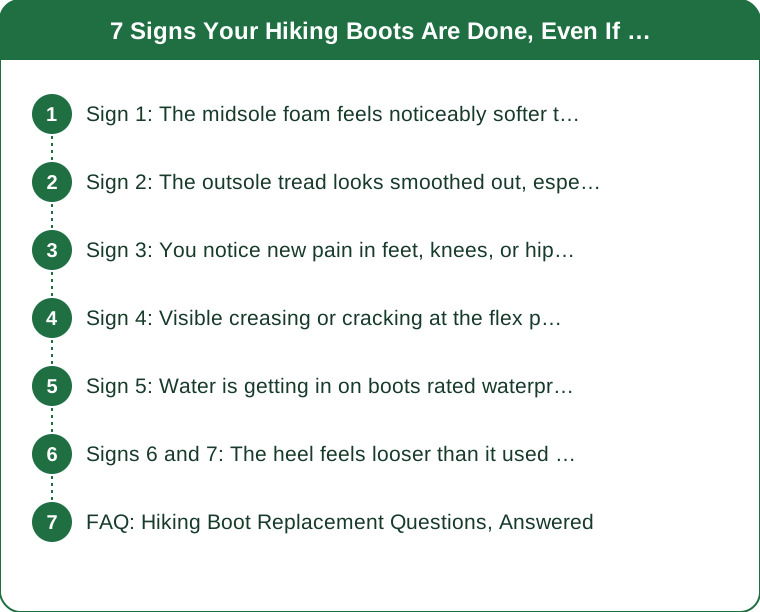
Sign 1: The midsole foam feels noticeably softer than when new
Midsole cushioning compresses permanently over time and mileage, and once it’s compressed, it no longer absorbs impact the way it did new — pressing a thumb into the midsole and comparing the give to a memory of how it felt new is a simple, telling check.
Sign 2: The outsole tread looks smoothed out, especially at the heel and toe
Worn-down lugs (the traction bumps on the sole) reduce grip significantly on wet rock, mud, or loose trail — a smoothed, rounded-looking tread pattern compared to sharp, defined lugs on a new boot is a clear and easy visual check.
Sign 3: You notice new pain in feet, knees, or hips on familiar trails
If a trail you’ve hiked comfortably before suddenly causes new foot, knee, or hip discomfort with no other change in your routine, degraded cushioning and support are a common, overlooked cause — not necessarily a new physical issue.

Sign 4: Visible creasing or cracking at the flex points
Deep creases or actual cracks where the boot naturally flexes (ball of the foot) signal breakdown of the material’s structural integrity — this is different from cosmetic scuffing and indicates the support structure itself is compromised, not just surface wear.
Sign 5: Water is getting in on boots rated waterproof
A waterproof membrane’s effectiveness degrades over time and mileage — if boots that used to keep feet dry are now letting moisture through on similar conditions, the waterproofing layer has broken down, regardless of how the exterior looks.
Signs 6 and 7: The heel feels looser than it used to, and you genuinely can’t remember buying them
Internal structural components (heel counters) can break down with mileage, leading to heel slip that wasn’t there when the boots were new — a comfort and blister-risk issue, not a lacing problem. And most hiking boots have an effective lifespan of roughly 500-800 miles depending on terrain and quality — if you can’t estimate roughly how many miles are on them or how long you’ve owned them, it’s worth a closer inspection using the signs above rather than assuming they’re still fine.

FAQ: Hiking Boot Replacement Questions, Answered
How many miles do hiking boots typically last?
Roughly 500-800 miles for most quality boots, though rocky or abrasive terrain shortens this and easier trail terrain can extend it somewhat.
Can worn-out midsole cushioning be fixed without replacing the whole boot?
Not really — the compressed foam is a structural material, not something that resets with cleaning or care; replacement is the actual fix once it’s compressed.
Is it safe to keep hiking in boots with worn-out tread?
It increases slip risk meaningfully on wet or loose terrain, so worn tread specifically is worth addressing sooner rather than pushing the boots further, especially in demanding conditions.
TL;DR:
- Compressed midsole and smoothed tread are structural failures, not cosmetic ones
- New pain on familiar trails often traces back to degraded cushioning
- Cracking at flex points and heel looseness signal real breakdown
- Most boots last roughly 500-800 miles — track it if you can
Boots that look fine on the outside can already be compromised where it actually matters.
Keep Reading
This article is for general informational and styling purposes only. Fit, sizing, and product availability may vary.