7 Reasons Your Hiking Boots Feel Different on Day Two
Quick Answer: Your feet are not the same size on day two. Sustained walking causes swelling of up to a full size that does not fully resolve overnight, the boot’s footbed has compressed and molded, socks have lost loft, and yesterday’s hot spots have become sensitive. The fix is mostly in lacing and sock management, not in the boots: relace from scratch each morning, carry a second sock thickness, and treat hot spots before they become blisters rather than after.
Every experienced multi-day hiker has a day-two routine. It is one of the biggest differences between people who enjoy long trips and people who endure them.
Reasons 1 and 2: Your feet have swollen and your socks have collapsed
1. Sustained walking swells your feet
Walking for hours increases blood flow to the feet, and gravity plus repeated impact causes fluid to accumulate in the tissues. Feet commonly swell by half a size to a full size over a long day, and more in heat or at altitude.
Overnight, some of that resolves - but not all of it. Day two starts with feet that are still larger than they were at the trailhead on day one, and the swelling then accumulates on top of that baseline. By day three, many hikers are effectively a half size up.
This is exactly why boot fitters recommend trying boots on in the afternoon and sizing with a thumb’s width of space at the toe. A boot that fits perfectly on a fresh foot is a boot that will be too small on day two.
2. Your socks have lost their loft
A merino or synthetic hiking sock has significant cushioning loft when fresh. After a full day of compression and moisture, that loft is substantially reduced - and a washed sock that dried overnight in cold air often has not fully recovered it.
Thinner socks change fit as much as a different boot would. Less cushioning means more direct pressure, more heel movement, and hot spots in places that were fine yesterday.
The fix for both: carry socks of two different thicknesses and choose based on how your feet feel that morning, not on what you wore yesterday.
Reason 3: Yesterday’s lacing is wrong today
Most day-two problems are lacing problems, and almost nobody relaces properly.
Loosening and retightening is not the same as relacing. Pulling the laces snug over yesterday’s tension distribution leaves the same pressure points in the same places, on feet that have changed shape.
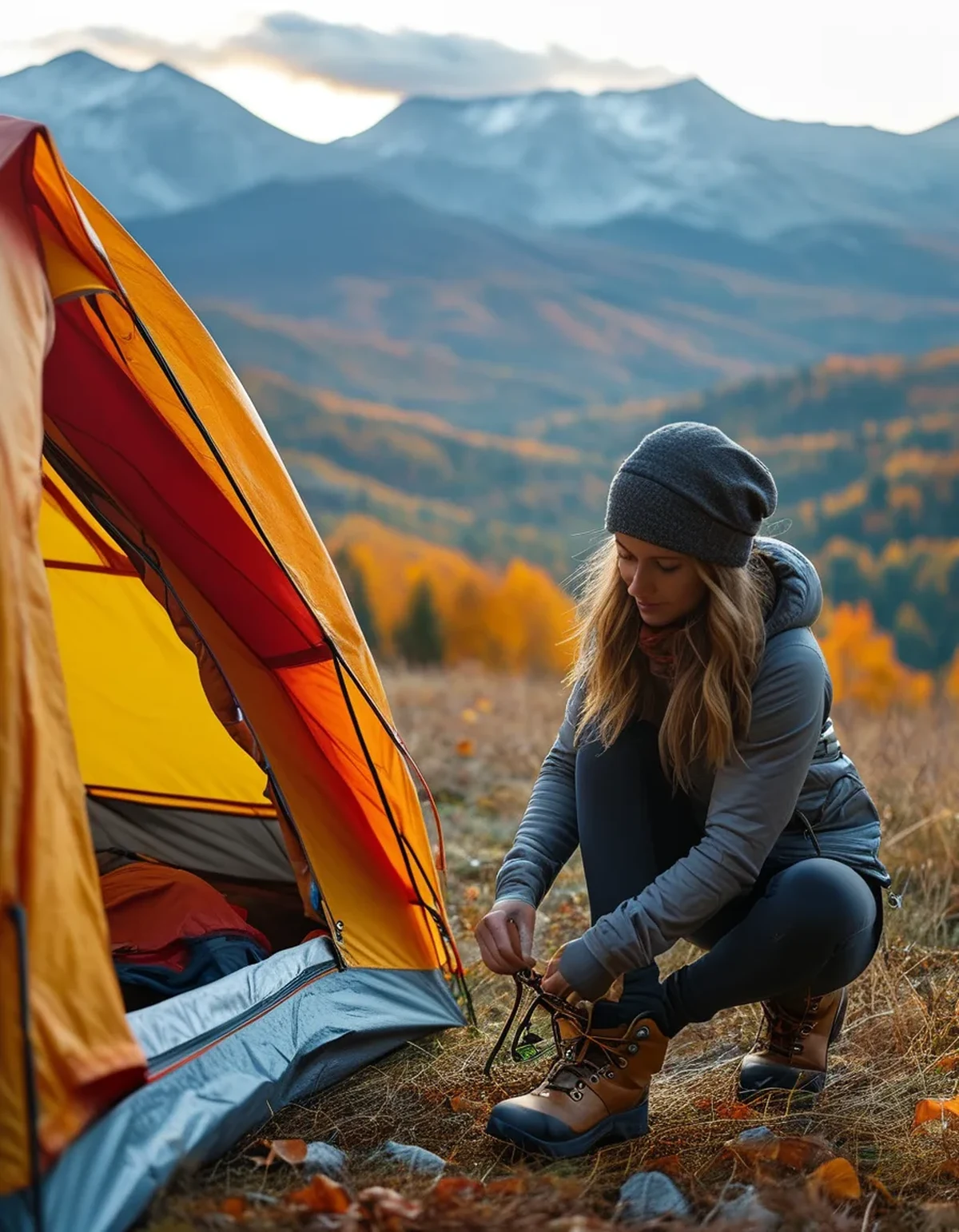
Unlace to the bottom eyelet and start again. Thirty seconds, every morning. Work tension from the toe upward, and let each section find its own tightness rather than dragging slack up from below.
Use the sections independently. Most hiking boots let you tension the forefoot and the ankle separately, usually with a lock or hook at the flex point. Looser over a swollen forefoot, firmer at the ankle is the standard day-two adjustment and it solves a surprising number of problems.
Heel lock lacing for downhill days. Running the lace through the top two eyelets to create a lock holds the heel back and prevents the toe-jamming that causes black toenails. If day two has significant descent, do this before you start, not after your toes hurt.
Expect to relace at lunch too. Feet swell through the day, and the tension that was right at 8am is usually too tight by 1pm.
Reason 4: The footbed has compressed and molded
Boots change during a hike, not just during break-in.
Insoles compress under sustained load. A day of walking flattens the cushioning, particularly under the heel and forefoot. It partially recovers overnight but not completely, so day two starts with less cushioning than day one did.
The midsole molds to your gait. EVA and polyurethane midsoles take a set under repeated loading, which is generally good - it is what makes boots feel broken in - but it also means the support characteristics shift slightly between days.
Damp insoles compress more. An insole that absorbed sweat all day and did not fully dry overnight is softer and offers less support. Pull the insoles out every night - this is the single most useful piece of evening boot maintenance and it takes five seconds.
Aftermarket insoles change this equation. A firmer, higher-quality insole resists compression better than most stock ones and holds its shape across multiple days. For anyone doing more than the occasional overnight, it is a worthwhile upgrade.
Carrying a spare insole is a genuine trick. Swapping to a dry pair on day two costs a few grams and restores cushioning that a compressed damp insole cannot deliver.
Reason 5: Yesterday’s hot spots are today’s problems
Skin that was irritated but intact yesterday is more sensitive today, and it fails faster.
Friction damage accumulates. A hot spot is the early stage of a blister - the layers of skin have started separating. Overnight it may look fine and still be fragile, and the same friction that took four hours to cause trouble yesterday takes one hour today.
Treat every hot spot the evening before. Tape, moleskin, or a blister plaster applied at camp on a spot that only feels warm is dramatically more effective than treating a full blister the next afternoon. This is the highest-value habit in multi-day hiking foot care.
Do not wait for pain to stop and check. The standard advice is to stop within minutes of noticing anything - not at the next viewpoint. Five minutes of taping prevents days of limping.
Existing blisters need cover and cushion. Clean, cover with a hydrocolloid dressing, and add a padded ring if the pressure continues. Do not deroof a blister - the skin over it is the best dressing available.
And moisture is the multiplier. Wet skin is far more susceptible to friction damage. Changing into dry socks at lunch halves the risk on a wet autumn day, and airing feet for ten minutes at each break helps more than it sounds like it should.
Reasons 6 and 7: Cold mornings and accumulated fatigue
6. Cold changes the boot and the foot
Leather and synthetic uppers stiffen in cold, and midsole foam is firmer at low temperatures. A boot that felt supple at 20°C feels rigid at 3°C, particularly in the first hour before body heat softens it.
Cold feet are also less sensitive, which means hot spots go unnoticed longer. This is why autumn and winter blisters often appear with no warning - the warning was there and you could not feel it.
Practical response: start the day slightly looser and retighten after 20 minutes, and check your feet at the first break rather than waiting for discomfort.
7. Tired legs change how you walk
By day two, fatigue alters your gait. Foot strike shifts, ankle stability drops slightly, and you push off less strongly. Different loading means pressure in different places - which is why day-two hot spots appear in places that were perfectly comfortable on day one.
Tired calves also reduce ankle control on descents, increasing heel movement inside the boot. This is where heel lock lacing and a slightly firmer ankle tension earn their keep.
The overall response to both: shorten your day-two plan slightly if you can, take breaks earlier and more often, and treat the first hour as a fit assessment rather than as distance to cover.

FAQ: Multi-Day Boot Fit Questions, Answered
Should I size up my hiking boots for multi-day trips?
Size for your feet in the afternoon with your hiking socks on, allowing about a thumb’s width in front of your longest toe. That allowance is what accommodates multi-day swelling - deliberately buying a full size up usually creates heel movement instead.
Why do my toes hurt only going downhill?
Your foot slides forward into the toe box on descents. Heel lock lacing through the top eyelets is the standard fix, along with keeping toenails trimmed short and straight before a trip.
Are two pairs of socks better than one?
A thin liner sock under a thicker hiking sock moves friction between the two sock layers rather than against your skin, which works well for people prone to blisters. It requires enough room in the boot, so test it before a trip rather than on day two.
How do I dry boots overnight on a trip?
Remove the insoles and loosen the laces fully, stuff the boots with dry cloth or newspaper if you have it, and keep them somewhere protected but ventilated. Never dry them next to a fire or heater - direct heat damages adhesives and shrinks leather, and it is a common way to ruin a good pair of boots in one evening.
TL;DR:
- Day-two feet are genuinely larger - swelling of up to a full size carries over overnight, and socks have lost loft.
- Relace from the bottom every morning, looser at the forefoot and firmer at the ankle, with heel lock lacing before descents.
- Insoles compress and stay damp - pull them out at night, and consider carrying a spare pair.
- Treat hot spots the evening before, not the afternoon after; cold mornings hide the warning signs.
The boots did not change - your feet, your socks, and your gait did. Build a five-minute morning routine around relacing and a foot check, and day two stops being the day that decides whether the rest of the trip is enjoyable.
Keep Reading
This article is for general informational and styling purposes only. Fit, sizing, and product availability may vary.