7 Hiking Boot Mistakes That Only Show Up on Multi-Day Trips
Quick Answer: Multi-day trips fail boots in ways day hikes never test: cumulative foot swelling that adds up to a full size by day three, socks that never fully dry, insoles that pack out under pack weight, lacing that was set for a fresh foot, and hot spots that had no chance to heal overnight. The fixes are mostly about sizing for a swollen foot, carrying a second insole, and re-lacing at every break instead of once at the trailhead.
On a day hike, your boots have one job for six hours and then you take them off.
On day three of a backpacking trip, they are working on a foot that has swollen, softened, blistered slightly, and never fully recovered overnight. The boot did not change. The foot inside it became a different foot.
Mistakes 1 and 2: sizing and socks
1. Sizing for a fresh foot instead of a day-three foot
Feet swell on multi-day trips, and the swelling accumulates. Day one you might gain a quarter size by evening and lose most of it overnight. By day three, you are carrying a persistent half to full size of extra volume that does not go away with a night of sleep.
The causes stack: sustained impact, heat, sodium from trail food, and long hours in a dependent position with a pack pressing down.
What this means for fitting: a boot that fits perfectly in the shop at 11am is fitting the smallest foot you will have on the entire trip. Standard advice is to size up half a size for backpacking, and that advice is correct for the wrong reason. It is not about the descent. It is about day three.
How to fit properly: try boots on in the late afternoon, wearing the socks you will actually hike in, with a weighted pack if the shop allows it. You want a thumb’s width in front of your longest toe when standing, not when sitting.
2. Assuming your socks will dry overnight
They will not, not reliably. In humid conditions, in a tent, at low overnight temperatures, a pair of merino socks that got sweaty on day one is still damp at 6am on day two.
A damp sock is dramatically worse than a dry one at managing friction. Wet skin is softer, the friction coefficient rises, and the blister timeline compresses from days to hours.
The fix is boring and effective: carry one more pair of socks than the trip length suggests, and rotate them onto the outside of your pack to dry during the day rather than hoping for overnight drying.
Also worth knowing: sleeping in dry socks does more for your feet than most recovery tricks. It gives skin uninterrupted hours to dry and re-toughen, which is the thing day hikes provide automatically and multi-day trips do not.
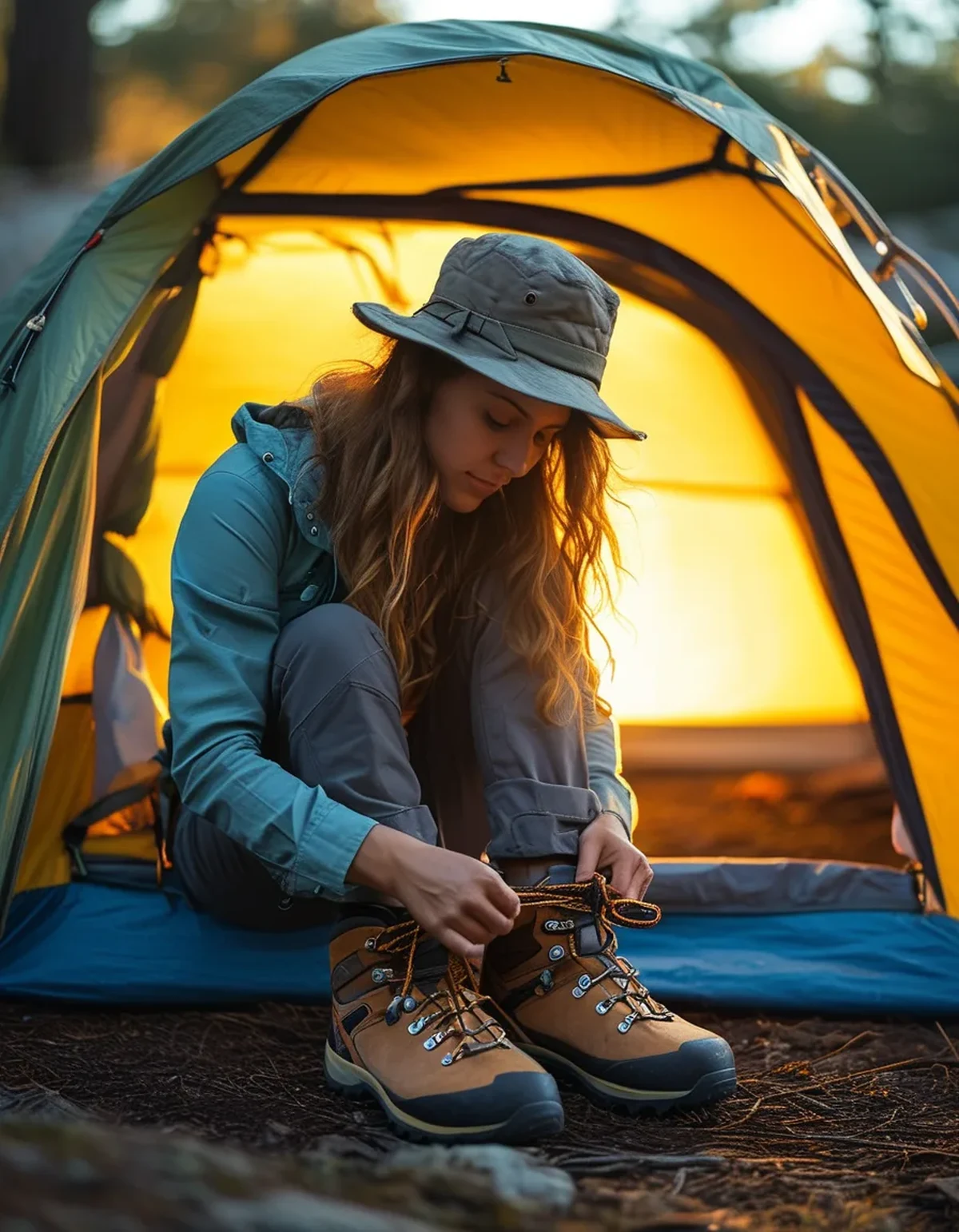
3. Never re-lacing after the trailhead
You lace at the car and never touch them again. On a day hike that is usually fine. On a multi-day trip, it is the source of a surprising share of problems.
Your foot changes shape across the day. Laces set for a morning foot are too tight by afternoon. Laces loosened for an afternoon foot are too loose for the next morning’s descent, which lets your foot slide forward and bruises toenails.
Build re-lacing into your breaks:
- Morning: standard tension, snug at the ankle
- Before a sustained descent: tighter across the instep, lock the heel back
- Before a sustained climb: looser over the forefoot to allow flex
- Mid-afternoon: reassess, usually looser overall as the foot has swollen
A surgeon’s knot at the instep, meaning one extra wrap before you cross the laces, lets you set different tension above and below without it migrating. It is the single most useful lacing technique for multi-day terrain.
4. Carrying no spare insole
Insoles compress. Under a loaded pack, they compress faster and further. The stock insole in most boots is a low-density foam that loses meaningful thickness and support within 30 to 50 miles of loaded hiking.
What you feel is not softness. It is your arch getting less support, which changes your gait, which is how a foot problem becomes a knee or hip problem by day four.
The fix costs about 60 grams: carry a spare insole and swap it on the morning of day three. Alternatively, start the trip with an aftermarket insole that resists packing out, and carry the stock one as backup.
This is one of the highest value-to-weight items you can add to a pack, and almost nobody carries it.
5. Treating a hot spot as something to deal with at camp
On a day hike you can push through a hot spot because you will be barefoot in four hours. On a multi-day trip, the calculus reverses completely.
A hot spot ignored at mile 4 on day one becomes a blister by mile 9, an open blister by day two, and a genuine trip-ending problem by day three, because it never gets a chance to heal.
Stop within five minutes of noticing. Not at the next break. Not at the top of the climb. The window between hot spot and blister is often less than a mile.
Cover with something low-friction. Tape works if applied smoothly with no wrinkles, since a wrinkle creates a new friction point. Blister-specific dressings work better but weigh more.
The underlying cause is usually one of three things: a seam or fold in the sock, moisture, or heel movement from lacing. Fix the cause at the same time, or you will be re-taping every two hours.
6. Bringing brand new boots because you did two day hikes in them
Two day hikes is not a break-in. It is an introduction.
Modern boots need less break-in than leather boots did, but they still need it, and more to the point, you need break-in as much as the boot does. The specific pressure points, the way your foot moves inside that particular heel cup, and where your sock bunches only reveal themselves under sustained load.
A realistic threshold before a multi-day trip: 30 to 50 miles, including at least one hike with a loaded pack and at least one sustained descent. Descents are where fit problems surface, and day hikes on flat terrain will not find them.
If you are short on time, wear them for full days around town. It is not the same as trail miles but it does considerably more than nothing, and it will find the obvious pressure points before day two of a trip does.
7. Ignoring what the season is about to do to your feet
Late summer into fall changes the boot equation in ways people plan for late.
Mornings are cold and afternoons are not. A boot and sock combination sized for a warm foot is tight on a cold-swollen morning foot and loose by 2pm. This is the season where a second sock weight in the pack earns its place.
Trails get wetter and stay wetter. Summer dries a wet boot overnight. Fall does not. If your boots are not genuinely waterproof, or if they are waterproof but you are going to submerge them, plan for wet feet as the default and manage friction accordingly rather than trying to stay dry.
Leaf cover hides the trail surface. Uneven footing you cannot see means more lateral movement in the boot, which means more heel rub and more ankle demand. This is a real argument for a higher cut boot in fall even if you hike low-cut all summer.
Cold feet fit differently. Blood flow drops, feet shrink slightly in the morning, and a boot laced tight in cold air becomes tight in a bad way once circulation returns on the first climb.
This is general information, not medical advice. See a clinician for any blister that shows signs of infection, or for numbness that persists after you take the boots off.
FAQ: Multi-Day Boot Questions, Answered
Should I size up for backpacking?
Usually half a size, because feet swell cumulatively across a multi-day trip and do not fully recover overnight. Fit in the late afternoon with your hiking socks on.
How many pairs of socks for a three-day trip?
Three pairs plus a dedicated dry sleeping pair. Socks rarely dry overnight, and a damp sock compresses the blister timeline from days to hours.
Do I need boots or will trail runners work?
Both work for multi-day trips. Trail runners dry faster and weigh less; boots give more ankle support on hidden footing and carry heavier loads better. Fall leaf cover tilts the argument toward boots more than summer conditions do.
TL;DR:
- Size for your day-three foot, not the fresh one in the shop. Half a size up, fitted in the afternoon.
- Carry more socks than you think and rotate them dry on the outside of your pack.
- Re-lace at every break, tighter for descents and looser for climbs.
- Carry a spare insole. Stock foam packs out within 30 to 50 loaded miles.
- Stop for a hot spot within five minutes. On a multi-day trip there is no overnight healing window.
Day hikes test whether a boot fits. Multi-day trips test whether it still fits after your foot has changed, which is a completely different question.
Keep Reading
This article is for general informational and styling purposes only. Fit, sizing, and product availability may vary.